
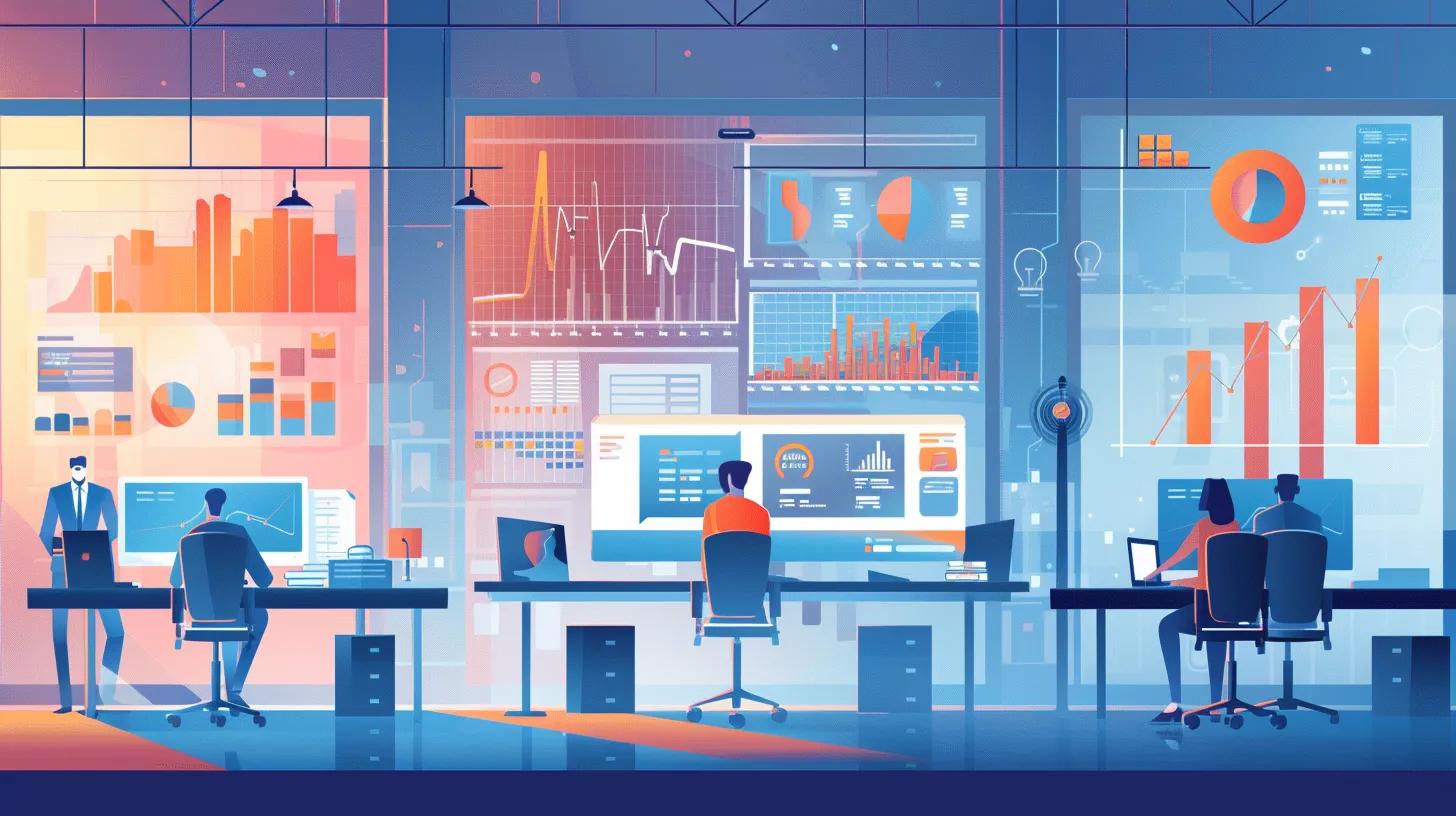
Realtime Performance Dashboards for Operational Visibility: Enhancing Business Intelligence and Performance Monitoring
In today’s fast-paced business environment, organizations are increasingly relying on realtime performance dashboards to gain operational visibility and enhance decision-making processes. These dashboards provide a comprehensive view of key performance indicators (KPIs) and metrics, enabling businesses to monitor their performance in real-time. This article will explore the essential features, benefits, and implementation strategies of realtime performance dashboards, as well as their specific applications across various industries. By understanding how these tools work, businesses can leverage them to improve operational efficiency and drive growth.
Key Features:
Realtime performance dashboards come equipped with several key features that enhance their functionality and usability. These features include:
- Interactive Dashboards: Users can interact with data visualizations, allowing for deeper insights and exploration of metrics.
- Real-Time Data Access: Dashboards pull data from various sources in real-time, ensuring that users have the most current information at their fingertips.
- Custom Reporting: Users can create tailored reports that focus on specific metrics relevant to their business needs.
- Predictive Analytics: Advanced analytics capabilities allow businesses to forecast trends and make proactive decisions.
- Cloud-Based Accessibility: Being cloud-based means that users can access dashboards from anywhere, facilitating remote work and collaboration.
These features collectively empower organizations to make informed decisions based on accurate and timely data.
Benefits:
The advantages of utilizing realtime performance dashboards are significant and can transform how businesses operate. Key benefits include:
- Informed Decision-Making: With access to real-time data, decision-makers can respond quickly to changes and trends.
- Operational Efficiency: Dashboards streamline data analysis processes, reducing the time spent on manual reporting.
- Enhanced Customer Insights: By analyzing customer data, businesses can tailor their services to meet customer needs more effectively.
- Competitive Advantage: Organizations that leverage realtime data can stay ahead of competitors by making faster, data-driven decisions.
- Scalability: As businesses grow, dashboards can easily adapt to include new data sources and metrics.
For companies like RooTree Analytic Inc., which specializes in lead generation and information hubs, implementing these dashboards can significantly enhance their operational visibility and performance monitoring capabilities.
Implementation Strategies:

To effectively implement realtime performance dashboards, organizations should consider the following strategies:
- Start Small, Scale Fast: Begin with a pilot project to test the dashboard’s effectiveness before a full-scale rollout.
- Ensure Data Quality: High-quality data is essential for accurate insights; organizations should prioritize data cleansing and validation.
- Select Appropriate Tools: Choose dashboard software that aligns with business needs and integrates well with existing systems.
- Train Teams: Provide training for employees to ensure they can effectively use the dashboards and interpret the data.
- Leverage Cloud Solutions: Utilize cloud-based platforms for flexibility and ease of access.
These strategies can help organizations maximize the benefits of their dashboards while minimizing potential challenges during implementation.
Industry-Specific Use Cases:

Different industries can leverage realtime performance dashboards in unique ways. Here are some examples:
- Insurance: Dashboards can track claims processing times and customer satisfaction metrics, helping insurers improve service delivery.
- Banking & Financial Services: Financial institutions can monitor transaction volumes and fraud detection metrics in real-time.
- Retail: Retailers can analyze sales data and inventory levels to optimize stock management and enhance customer experiences.
- Healthcare: Hospitals can track patient flow and treatment outcomes, improving operational efficiency and patient care.
- Manufacturing: Manufacturers can monitor production metrics and equipment performance to reduce downtime and increase productivity.
These use cases illustrate the versatility of realtime performance dashboards across various sectors.
What Are Realtime Performance Dashboards and Their Role in Operational Visibility?
Realtime performance dashboards are data visualization tools that provide a dynamic view of an organization’s performance metrics. They aggregate data from multiple sources, allowing users to monitor key indicators in real-time. The primary role of these dashboards is to enhance operational visibility by presenting complex data in an easily digestible format. This enables stakeholders to make informed decisions quickly, ultimately driving business success.
How Dashboards Improve Operational Decision Making
Dashboards improve operational decision-making by displaying key metrics that are crucial for assessing performance. By integrating real-time data, organizations can identify trends and anomalies as they occur. This immediate access to information allows decision-makers to act swiftly, whether it involves reallocating resources, adjusting strategies, or addressing potential issues before they escalate. The ability to visualize data also aids in communicating insights across teams, fostering a culture of data-driven decision-making.
How Do Realtime Dashboards Benefit Financial Institutions and Insurance Companies?
Financial institutions and insurance companies benefit significantly from realtime dashboards through enhanced operational agility and customer insights. These dashboards provide real-time access to critical data, such as transaction volumes and claims processing times, enabling organizations to respond promptly to market changes. Additionally, the integration of predictive analytics helps these institutions anticipate customer needs and mitigate risks effectively. By leveraging these insights, financial and insurance companies can improve their service offerings and maintain a competitive edge.
Industry-Specific Use Cases and Performance Metrics
Various industries utilize performance dashboards to track specific metrics that are vital for their operations. For instance:
- Fraud Detection in Banking: Dashboards can monitor transaction patterns to identify suspicious activities.
- Risk Management: Insurance companies can assess risk exposure in real-time, allowing for timely adjustments to policies.
- Sales Performance Review in Insurance: Dashboards can track agent performance and sales metrics, facilitating better management.
- Agent Onboarding: Real-time tracking of onboarding processes can enhance training efficiency and effectiveness.
- Customer Engagement: Retailers can analyze customer interactions to improve engagement strategies.
These performance metrics are essential for driving operational improvements and achieving business objectives.
Driving ROI and Business Growth Through Data Analytics
Data analytics plays a crucial role in driving return on investment (ROI) and business growth. By utilizing realtime performance dashboards, organizations can identify areas for improvement and optimize their operations. The insights gained from data analytics enable businesses to make informed decisions that enhance efficiency, reduce costs, and improve customer satisfaction. As a result, companies can achieve sustainable growth and a higher ROI through strategic data-driven initiatives.
The strategic importance of real-time data analysis for predicting market trends and improving enterprise performance has been a long-standing focus in the evolution of business intelligence.
Towards Real-time Business Intelligence for Enhanced Enterprise Performance
Analysing data to predict market trends of products and services and to improve performances of enterprise business systems has always been part of running a competitive business. But it is becoming essential nowadays that not only is the analysis done on real-time data, but also actions in response to analysis results can be performed in real time and instantaneously change parameters of business processes. This paper discusses issues and problems of current business intelligence systems, and then outlines our vision of future real-time business intelligence. We present a list of emerging technologies which could contribute to the realisation of real-time business intelligence and some examples of applying them to improve BT’s systems and services.
Towards real-time business intelligence, 2005
Which Data Integration Techniques Optimize Dashboard Analytics Platforms?
To optimize dashboard analytics platforms, organizations should consider various data integration techniques, including:
- Data Mapping Layer: Establishing a data mapping layer ensures that data from different sources is accurately aligned and integrated.
- APIs: Utilizing application programming interfaces (APIs) allows for seamless data exchange between systems, enhancing real-time data access.
- Databases: Implementing robust database solutions can support the storage and retrieval of large volumes of data efficiently.
These techniques are essential for ensuring that dashboards provide accurate and timely insights.
How Can Businesses Leverage SaaS Performance Monitoring Software for Enhanced Operational Visibility?
Businesses can leverage Software as a Service (SaaS) performance monitoring software to enhance operational visibility by utilizing features such as real-time data access, interactive dashboards, and custom reporting. SaaS solutions offer the flexibility of cloud-based access, allowing teams to collaborate and analyze data from anywhere. By integrating predictive analytics, organizations can also forecast trends and make proactive decisions that drive operational efficiency. This approach not only improves visibility but also supports strategic planning and execution.
