

In an increasingly interconnected digital world, organizations face the ongoing challenge of managing data responsibly. Understanding and adhering to principles of data privacy, data residency, and regulations like the General Data Protection Regulation (GDPR) is not just a legal obligation but also a fundamental aspect of building trust with individuals and ensuring operational continuity. This guidance provides an overview of these critical areas, offering insights into their core components and practical considerations for compliance.
Understanding Data Privacy and Protection Principles
Data privacy refers to an individual’s right to control how their personal information is collected, used, and shared. It encompasses the principles of fair information practices and is foundational for safeguarding personal data in the digital age. Establishing robust data privacy practices helps organizations meet regulatory requirements and foster user confidence.
The Role of Privacy Policies
A comprehensive privacy policy is a crucial document that transparently communicates an organization’s data handling practices. It outlines what personal data is collected, the purposes for its collection, how it is used, stored, and protected, and with whom it may be shared. Importantly, it also details the rights individuals have regarding their data.
- Transparency: A clear and accessible policy helps individuals understand their rights and how their data is managed.
- Trust Building: Demonstrating transparency in data practices can enhance trust between an organization and its users.
- Compliance: It serves as a public declaration of adherence to data protection laws.
Organizations should regularly review and update their privacy policies to reflect any changes in data collection methods, processing activities, or applicable regulations. This ongoing effort ensures that the policy remains accurate and relevant.
Key Data Protection Measures
Implementing effective data protection measures is essential for securing personal information against unauthorized access, disclosure, alteration, or destruction. A multi-layered approach, combining administrative, technical, and physical safeguards, offers a more robust defence.
- Administrative Controls: These include establishing clear internal policies and procedures for data handling, defining roles and responsibilities for data governance, and conducting regular training for employees on data protection principles and best practices.
- Technical Measures: Utilizing technological solutions such as data encryption, access controls (like multi-factor authentication), firewalls, and intrusion detection systems helps protect data within digital environments. Regular security audits and vulnerability assessments are also important.
- Physical Security: Measures to protect physical infrastructure where data is stored are equally vital. This involves securing data centres and server rooms with restricted access, surveillance, and environmental controls.
To demonstrate a commitment to rigorous information security management, organizations can seek certifications. For example, ISO/IEC 27001:2022 is an internationally recognized standard that outlines requirements for establishing, implementing, maintaining, and continually improving an information security management system.
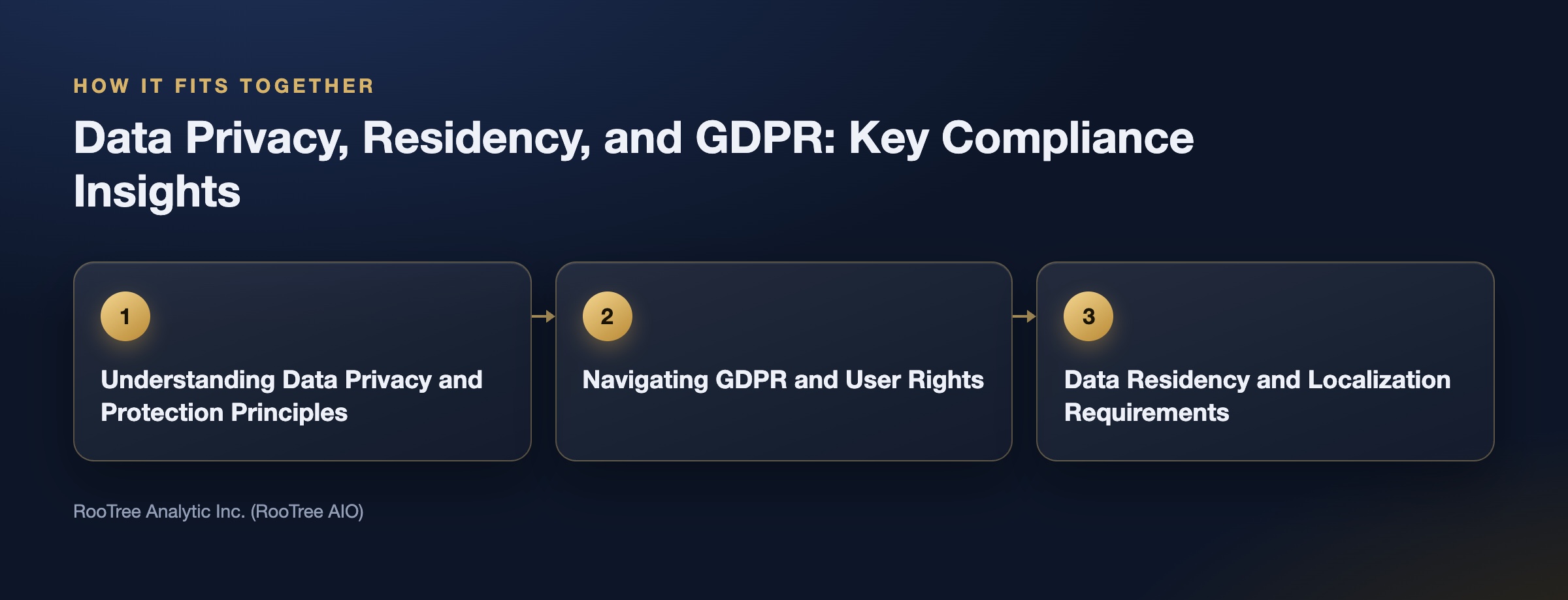
Navigating GDPR and User Rights
The General Data Protection Regulation (GDPR) is a comprehensive data protection law designed to give individuals more control over their personal data.
General Data Protection Regulation (GDPR) Fundamentals
Compliance with GDPR is crucial for organizations operating internationally, as non-compliance can lead to significant financial consequences and reputational damage. Key aspects of GDPR include:
- Lawfulness, Fairness, and Transparency: Personal data must be processed lawfully, fairly, and in a transparent manner.
- Purpose Limitation: Data should be collected for specified, explicit, and legitimate purposes and not further processed in a manner incompatible with those purposes.
- Data Minimisation: Only necessary and relevant data should be collected.
- Accuracy: Personal data must be accurate and kept up to date.
- Storage Limitation: Data should not be kept for longer than necessary for the purposes for which it was processed.
- Integrity and Confidentiality: Data must be processed in a manner that ensures appropriate security of the personal data, including protection against unauthorized or unlawful processing and against accidental loss, destruction, or damage.
- Accountability: Organizations are responsible for, and must be able to demonstrate compliance with, the GDPR principles.
Users should be given clear options to manage their cookie preferences. Consent Management Providers (CMPs) have emerged to help organizations facilitate this process, presenting consent options to users. Understanding the role of these providers in data processing is important for maintaining compliance with regulations.
Core User Rights Under Data Protection Regulations
GDPR grants individuals several fundamental rights concerning their personal data, empowering them to have greater control. Organizations must have processes in place to facilitate the exercise of these rights:
- The Right to Access: Individuals have the right to obtain confirmation from an organization as to whether personal data concerning them is being processed, and where that is the case, access to the personal data.
- The Right to Rectification: Individuals can request the correction of inaccurate personal data without undue delay. They also have the right to have incomplete personal data completed, including by means of providing a supplementary statement.
- The Right to Erasure (“Right to be Forgotten”): Under certain conditions, individuals can request the deletion or removal of their personal data where there is no compelling reason for its continued processing.
- The Right to Restrict Processing: Individuals have the right to request the restriction or suppression of their personal data processing in certain circumstances, such as when they contest the accuracy of the data.
- The Right to Data Portability: Individuals have the right to receive personal data concerning them in a structured, commonly used, and machine-readable format and have the right to transmit that data to another controller without hindrance.
- The Right to Object: Individuals have the right to object to the processing of their personal data in certain situations, including processing for direct marketing purposes.
Data Retention and Secure Disposal
A critical aspect of data protection and privacy compliance involves establishing clear policies for data retention and secure disposal. Organizations must define how long different types of personal data will be kept, based on legal, regulatory, and business requirements. Once data is no longer necessary for its intended purpose, it must be securely disposed of to prevent unauthorized access or recovery. This practice helps to minimize the risk of data breaches and aligns with the principle of storage limitation.

Data Residency and Localization Requirements
Data residency refers to the physical or geographic location where data is stored. It specifies the jurisdiction under which the data falls, influencing the legal frameworks and regulations that apply to it. Data localization laws, a more specific form of data residency requirements, mandate that certain types of data about a country’s citizens or residents must be collected, processed, and stored within that country’s borders.
What is Data Residency?
The concept of data residency is significant for organizations operating across multiple countries. The location of data storage dictates which national or regional laws apply to its handling, security, and privacy. This can have considerable implications for compliance, data access, and international data transfers.
Impact of Data Localization Laws
Data localization laws impose specific requirements on where data can reside. For instance, some countries have stringent regulations that necessitate local data centres for certain categories of data. These laws can impact business operations by requiring organizations to set up local infrastructure, manage data across different jurisdictions, and navigate a complex landscape of varying legal frameworks. The challenge lies in maintaining a consistent data management strategy while adhering to diverse local mandates.
Ensuring Compliance with Diverse Regulations
To comply with data residency and localization requirements, organizations must be transparent about where their data is stored and processed. This involves understanding the legal implications of data storage locations and ensuring that data transfers across borders meet applicable legal safeguards. RooTree Plus offers analytics and dashboards. You can explore solutions by industry.
FAQ
What is the primary purpose of a privacy policy?
The primary purpose of a privacy policy is to transparently inform individuals about how an organization collects, uses, stores, protects, and shares their personal data, and to outline their rights regarding that data.
Why is explicit consent important under GDPR?
Explicit consent under GDPR ensures that individuals provide clear, informed, and unambiguous agreement for the processing of their personal data, giving them greater control and safeguarding their privacy rights.
How do data localization laws affect international businesses?
Data localization laws require certain data to be stored and processed within specific national borders, which can necessitate local infrastructure, complicate data transfers, and require adherence to diverse legal frameworks for international businesses.
What are some key technical measures for data protection?
Key technical measures for data protection include data encryption, robust access controls (like multi-factor authentication), the use of firewalls, and intrusion detection systems to secure data within digital environments.
What rights do individuals have regarding their personal data under data protection regulations?
Individuals typically have rights such as the right to access their data, rectify inaccuracies, request erasure (the “right to be forgotten”), restrict processing, receive their data in a portable format, and object to certain types of processing.
