

Sales leaderboard platforms offer a dynamic way for organizations to visualize sales performance, encourage healthy competition, and motivate teams. By providing transparent, up-to-date insights into individual and group achievements, these tools aim to create an engaging environment that supports sales goals.
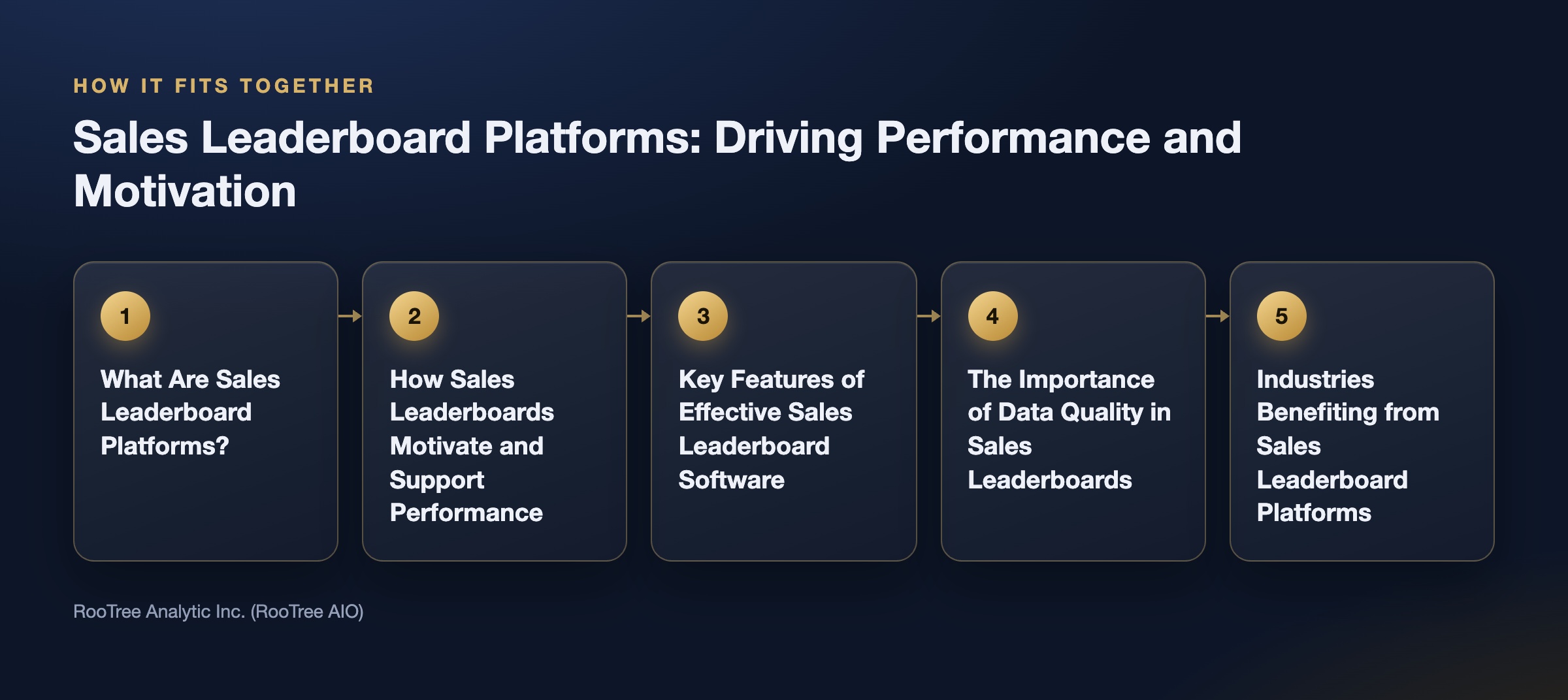
This article explores the core aspects of sales leaderboard platforms, including how they influence motivation, their essential features, the critical role of accurate data, and how various industries can benefit from their implementation.
What Are Sales Leaderboard Platforms?
A sales leaderboard platform is a digital tool designed to track, display, and analyze key performance indicators (KPIs) for sales professionals and teams. These platforms typically present data in an easily digestible visual format, such as rankings, charts, and progress bars. The primary goal is to make sales performance visible, fostering a sense of accomplishment and encouraging continuous improvement among team members.
These platforms move beyond static reports by offering real-time updates, allowing sales personnel to see their current standing and progress toward targets at any moment. This immediate feedback loop can be a powerful motivator, helping individuals understand their impact and adjust strategies promptly.
How Sales Leaderboards Motivate and Support Performance
Sales leaderboards leverage several psychological principles to drive motivation and enhance performance:
- Real-Time Feedback: Immediate visibility of results allows sales professionals to connect their efforts directly to outcomes. This instant feedback helps them understand what is working and what needs adjustment, promoting a proactive approach to sales activities.
- Healthy Competition: By openly displaying rankings and achievements, leaderboards can spark a competitive spirit among team members. This competition, when managed constructively, can push individuals to strive for higher performance and reach new personal bests.
- Goal Clarity: Leaderboards often display progress against specific sales targets or metrics. This clear visualization helps individuals stay focused on their goals and understand their current position relative to those objectives.
- Recognition and Acknowledgment: Public recognition for top performers can be a significant motivator. Seeing one’s name at the top of a leaderboard provides a sense of achievement and can encourage others to work towards similar recognition.
- Team Engagement: While fostering individual competition, leaderboards can also build team cohesion. Teams can set collective goals and track their progress together, encouraging peer support and shared success.
Key Features of Effective Sales Leaderboard Software
To be truly effective, sales leaderboard software typically includes a range of features designed to maximize engagement and utility:
- Real-Time Data Display: The ability to update metrics instantly ensures that the information presented is always current, providing accurate feedback on ongoing performance.
- Customizable Dashboards and Metrics: Users should be able to tailor their views to focus on the KPIs most relevant to their roles or team goals. This allows for personalized tracking and helps keep individuals focused on specific objectives.
- Gamification Elements: Incorporating game-like features such as points, badges, levels, and virtual rewards can make the sales process more engaging and fun. These elements can add an extra layer of motivation beyond traditional performance metrics. Mango Rewards, for instance, offers sales gamification, leaderboards, and incentive payouts.
- Integration Capabilities: Seamless connectivity with existing operational systems, such as customer relationship management platforms and other sales management tools, is crucial. This ensures data accuracy and reduces manual data entry.
- Accessibility: Leaderboards should be easily accessible across various devices, including desktop computers and mobile devices, allowing sales teams to stay informed wherever they are.

The Importance of Data Quality in Sales Leaderboards
The effectiveness of any sales leaderboard platform hinges on the quality and accuracy of the data it displays. Inaccurate or outdated data can undermine trust, demotivate teams, and lead to poor decision-making.
Organizations face challenges in maintaining data integrity. For example, Gartner estimated in 2018 that poor data quality could cost organizations an average of $15 million annually. Furthermore, research summarized by PSP IT indicates that a large majority of spreadsheets, close to 90%, contain errors, which can affect data reliability when these are used as primary data sources.
Historical examples underscore this risk. The JPMorgan ‘London Whale’ trading loss of about $6 billion in 2012 was partly linked to issues in a risk model that relied on spreadsheets with manual copy-and-paste steps, highlighting how data inaccuracies can contribute to significant financial impacts.
For sales leaderboards to be reliable motivational tools, the underlying data must be consolidated into a single source of truth. This approach ensures consistency and accuracy across all reported metrics, providing a trustworthy foundation for performance tracking and analysis. RooTree Analytic Inc., based in Toronto and Mumbai, offers AI-first business intelligence and data analytics tools that consolidate data into a single source of truth with live dashboards and row-level security. The company is ISO/IEC 27001:2022 certified, demonstrating a commitment to information security management.
Industries Benefiting from Sales Leaderboard Platforms
Sales leaderboard platforms can provide value to a variety of industries that rely on incentivizing sales performance and managing extensive sales teams. These include:
- Finance: Financial services institutions can use leaderboards to track performance metrics for advisors, sales representatives, and branch personnel, encouraging achievement of targets for new accounts, product sales, and client engagement.
- Insurance: In the insurance sector, leaderboards help agents and brokers monitor policy sales, renewals, and client interactions. This visibility can motivate individuals to meet or exceed their sales quotas and improve client retention. V-Insure, for example, is a product specifically for insurance field operations.
- Lending: Lending institutions can track loan origination, customer approvals, and portfolio growth. Leaderboards can foster a competitive yet collaborative environment among loan officers and sales teams.
- Distribution: Companies in distribution can leverage these platforms to track sales volume, market penetration, and product-specific targets for their sales force. It helps highlight top performers and areas for growth across different regions or product lines.
- Small and Medium-sized Enterprises (SMEs): Regardless of sector, SMEs with sales teams can benefit from the clear visibility and motivational aspects of leaderboards. These tools can help smaller organizations manage performance effectively without extensive manual reporting processes.
For more information on industry-specific solutions, visit our solutions by industry page.
Implementing a Sales Leaderboard Solution
Successfully implementing a sales leaderboard platform involves strategic planning and thoughtful execution:
- Define Clear Objectives: Determine what specific sales behaviors or outcomes the leaderboard is intended to influence. Whether it’s increasing call volume, closing more deals, or improving customer satisfaction, clear goals are essential.
- Identify Relevant Metrics: Select KPIs that directly align with the defined objectives and are truly indicative of desired performance. These metrics should be transparent, fair, and easily understood by the entire sales team.
- Ensure Data Integration: Establish robust connections with existing data sources to ensure that the leaderboard receives accurate and timely information without manual intervention.
- Communicate and Train: Clearly communicate the purpose of the leaderboard, how it works, and what metrics are being tracked. Provide training to ensure all team members understand how to interpret and use the information presented.
- Foster a Positive Environment: Emphasize healthy competition and ensure that the leaderboard contributes to a supportive team culture, rather than creating undue pressure or negative rivalries.
- Review and Adapt: Regularly assess the effectiveness of the leaderboard. Gather feedback from the sales team and be prepared to make adjustments to metrics, design, or gamification elements to optimize its impact.
FAQ
How do sales leaderboards use gamification?
Sales leaderboards often integrate gamification by adding game-like elements such as points for specific actions, badges for achievements, and tiered levels of recognition. These features can make performance tracking more engaging and provide additional incentives for sales team members to reach their goals.
Can sales leaderboards track individual and team performance?
Yes, most effective sales leaderboard platforms are designed to track both individual and team performance. They allow for the display of individual rankings and progress, as well as aggregated team results, fostering both personal accountability and collaborative effort.
What kind of data is typically displayed on a sales leaderboard?
Sales leaderboards typically display key performance indicators (KPIs) relevant to sales, such as sales volume, number of deals closed, average deal size, calls made, leads converted, or customer satisfaction scores. The specific metrics can be customized to align with an organization’s particular sales objectives.
How frequently do sales leaderboards update performance data?
Many modern sales leaderboard platforms offer real-time or near real-time data updates. This means that as sales activities are completed and recorded in connected systems, the leaderboard reflects these changes almost immediately, providing up-to-the-minute insights into performance.
Are sales leaderboard platforms secure?
Reputable sales leaderboard platforms prioritize data security, especially given the sensitive nature of sales performance data. They often include features like row-level security and comply with industry security standards. For example, RooTree Analytic Inc. is ISO/IEC 27001:2022 certified, demonstrating adherence to robust information security management practices. You can learn more about us on our about us page.
