

In the complex environment of distribution, accurately understanding performance is essential for driving growth and strengthening relationships with channel partners. Many businesses find it challenging to measure distributor effectiveness and convert performance data into actionable strategies. This guide provides a structured approach to conducting performance reviews and implementing analytics tools to gain clearer insights into your distribution network.
We will explore key performance indicators, the capabilities of effective dashboards, and methods for integrating data analytics into your evaluation processes. By focusing on these areas, organizations can make informed decisions that contribute to overall business success.
Understanding Distribution Performance
Effective distribution performance relies on consistent monitoring and analysis. This involves identifying what aspects of distributor operations are working well and where improvements are needed. A clear understanding of performance can help businesses align their strategies with market demands and partner capabilities.
The Impact of Data Quality
The foundation of any performance review or analytical dashboard is the quality of the data. Inaccurate or inconsistent data can lead to flawed conclusions and misguided strategies. Gartner estimated in 2018 that poor data quality costs organizations an average of $15 million per year. Furthermore, research summarized by PSP IT indicates that a significant number of spreadsheets, close to 90%, contain errors, with specific studies citing 88%. Such errors can introduce considerable risk into financial or operational reporting.
For example, the JPMorgan ‘London Whale’ trading loss of about $6 billion in 2012 was partly linked to a risk model maintained in spreadsheets that involved manual copy-and-paste steps. This highlights the potential for significant issues when relying on systems prone to manual errors or lacking robust data governance.
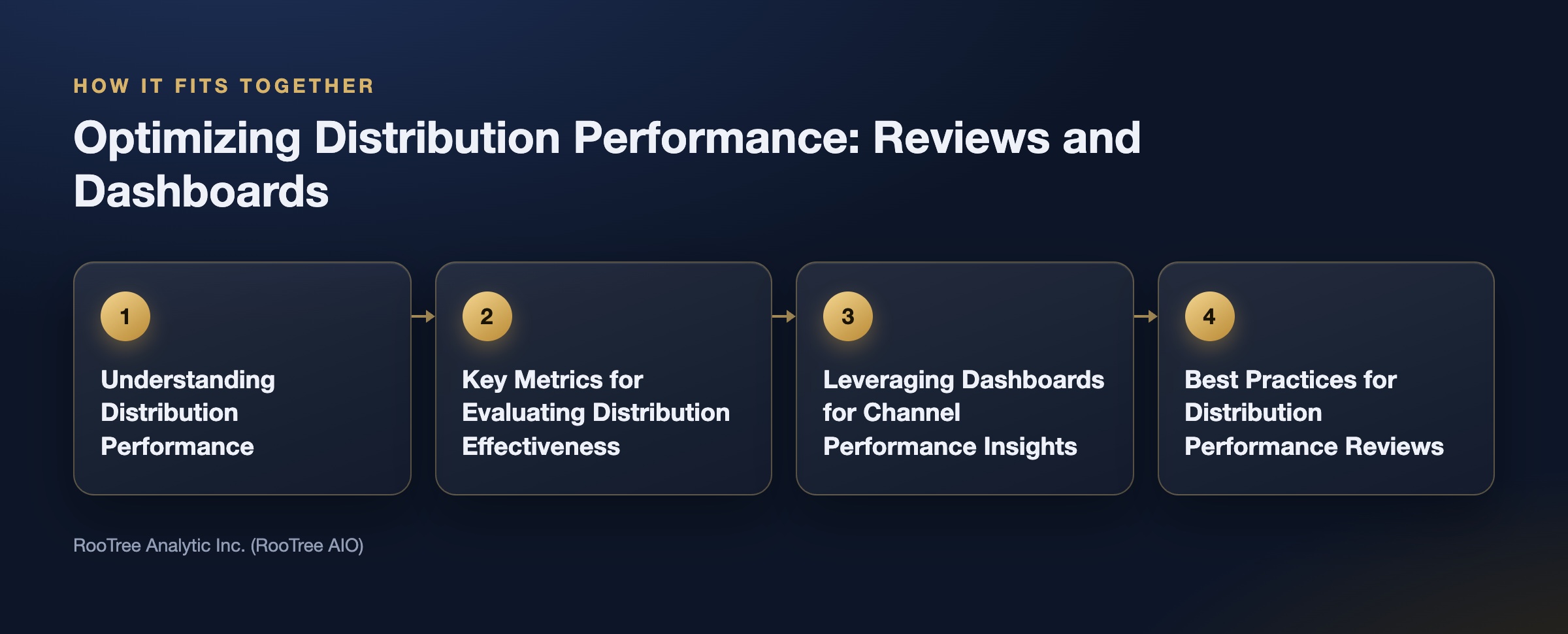
Key Metrics for Evaluating Distribution Effectiveness
Identifying and analyzing key performance indicators (KPIs) is fundamental to effective distribution performance reviews. These metrics offer insights into sales effectiveness, operational efficiency, and overall channel health. Focusing on relevant KPIs allows businesses to make data-backed decisions that foster growth and improve partner relationships. Essential metrics encompass sales performance, customer engagement, and inventory management indicators.
Sales and Market Share Metrics
- Sales Growth: This measures the increase in sales revenue over a defined period, indicating the effectiveness of sales strategies and market penetration. Consistent growth suggests a healthy and productive distribution channel.
- Market Share: This metric represents the proportion of total market sales achieved by a specific distributor or channel. It reflects competitive positioning and the distributor’s ability to capture a segment of the market.
Operational and Customer Metrics
- Customer Retention Rate: This indicator shows the percentage of customers a distributor maintains over time. A high retention rate often correlates with customer satisfaction and loyalty, which are crucial for sustainable business.
- Inventory Turnover Rate: This measures how many times inventory is sold and replaced over a period. An optimal turnover rate indicates efficient inventory management, reducing carrying costs and ensuring product availability.
By regularly tracking these KPIs, businesses can gain a comprehensive understanding of their distributor network’s effectiveness and identify areas for strategic focus. For a broader view of relevant metrics, resources like a KPI catalog for sales and distribution can be helpful.
Leveraging Dashboards for Channel Performance Insights
Sales channel dashboards serve as valuable tools for enhancing the evaluation of partner performance. They provide visual representations of key metrics, allowing stakeholders to quickly assess performance trends and make timely decisions. By consolidating various data points into a single view, dashboards facilitate improved communication and collaboration between manufacturers and their distribution partners.
Tools like RooTree Plus offer capabilities for building analytics and dashboards, which can present complex distribution data in an accessible format.
Essential Dashboard Features
An effective distribution dashboard should incorporate several key features to maximize its utility:
- Real-Time Data Access: Access to current information is vital for timely decision-making. Dashboards that update automatically with the latest data ensure that evaluations are based on the most recent operational realities.
- User-Friendly Interface: An intuitive and clear design helps users navigate the dashboard with ease, ensuring that insights are readily accessible to all relevant parties without extensive training.
- Customizable Reports: The ability to tailor reports to specific needs allows different stakeholders to focus on the metrics most relevant to their roles and objectives. This flexibility enhances the dashboard’s relevance across various departments.
RooTree Analytic Inc. (RooTree AIO), an AI-first business intelligence and data analytics provider with operations in Toronto and Mumbai, helps consolidate data into a single source of truth, offering live dashboards with row-level security.

Best Practices for Distribution Performance Reviews
Conducting thorough and effective distribution performance reviews involves adhering to several best practices. These ensure that evaluations are comprehensive, fair, and lead to constructive outcomes.
- Establish Regular Review Schedules: Consistent review cycles (e.g., quarterly or semi-annually) help in tracking progress over time and addressing issues promptly.
- Incorporate Partner Feedback: Soliciting input from distribution partners fosters a collaborative environment and provides valuable qualitative insights that complement quantitative data.
- Utilize Advanced Analytics Tools: Employing specialized analytics tools can help process large datasets, identify nuanced trends, and forecast potential performance challenges.
- Set Clear Objectives and KPIs: Before each review, define what success looks like for each distributor, based on agreed-upon KPIs, to ensure alignment and clear expectations.
Integrating Data Analytics
Integrating data analytics into distributor evaluation processes involves a systematic approach to data handling and interpretation:
- Robust Data Collection Techniques: Establish reliable methods for gathering data from various sources. This ensures that all relevant performance aspects are captured for a complete view.
- Systematic Analysis Methods: Apply analytical tools to interpret data, identify patterns, and pinpoint areas of strong performance or potential gaps. This moves beyond simple reporting to understanding underlying causes.
- Clear Reporting Structures: Develop frameworks for presenting performance data that are easy for stakeholders to understand and act upon. Reports should highlight key insights and recommended actions.
Automated reporting tools can significantly streamline these assessments by reducing manual effort and increasing accuracy. Such tools can generate routine reports, highlight deviations from benchmarks, and feed data into dashboards. For motivating sales teams within the distribution channel, products like Mango Rewards handle sales gamification, leaderboards, and incentive payouts.
RooTree Analytic Inc. (RooTree AIO) is ISO/IEC 27001:2022 certified, demonstrating a commitment to information security management. RooTree Analytic Inc. (RooTree AIO) was incubated by the Toronto Business Development Centre.
FAQ
What are the primary goals of distribution performance reviews?
The primary goals of distribution performance reviews are to assess the effectiveness of channel partners, identify areas for improvement, align strategies, and ultimately drive sales growth and optimize operational efficiency within the distribution network. They also help in fostering stronger relationships by providing a structured framework for feedback and collaboration.
How can distribution dashboards improve decision-making?
Distribution dashboards improve decision-making by providing a consolidated, visual overview of key performance metrics, often in real-time. This allows stakeholders to quickly identify trends, pinpoint issues, and understand performance at a glance. Such immediate insights enable faster, more informed responses to market changes or operational challenges, leading to more strategic adjustments.
Why is data quality important in distribution analytics?
Data quality is crucial in distribution analytics because accurate insights depend on reliable data. Poor data quality can lead to incorrect conclusions, misinformed decisions, and wasted resources. For example, inaccurate sales figures or inventory levels can result in missed opportunities or excessive costs. Maintaining high data quality ensures that analytics genuinely reflect performance and support effective strategies.
What role does automation play in performance assessments?
Automation streamlines performance assessments by reducing manual data collection and report generation. Automated tools can gather data from various systems, calculate KPIs, and produce reports or dashboard updates regularly. This not only saves time and reduces the likelihood of human error but also ensures consistency in reporting, allowing teams to focus more on analysis and strategic planning rather than data compilation.
